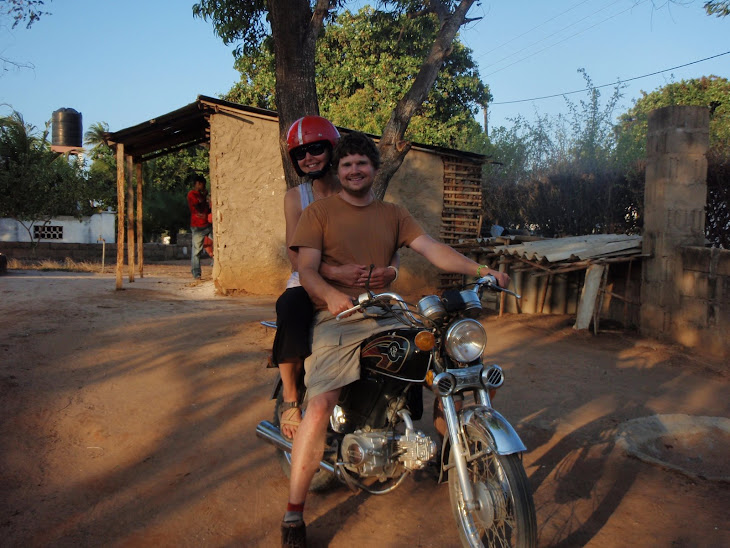
We arrived here on Saturday. Thankfully Sidney came to get us from the airport. After an hour bus then taxi drive, we came to a dark side street. The ‘door’ looked like the others, a steel store front or garage door. It was raining and the electricity was out. The staff and boys were on the roof, having a farewell BBQ for some of the staff. After they threw the keys down, we took our stuff to our rooms. My room is a shared room with 8 bunk beds in it. There was water seeping in from under the door onto the floor where I put my bag.
That night was the first one since leaving home that I did not sleep well. There is so much noise here. The next morning was the first one since leaving home that I felt homesick. It is claustrophobic here. No space in the room. No space in this building, that is all concrete, with its walls jutting up against every other building in this city, and which houses boys, staff, volunteers and students. No space in this city. The city’s name is Belo Horizonte, which means Beautiful Horizon. I can’t seem to find the horizon here. This must be what reverse culture shock is. Leaving the beauty, quiet and slow pace of Africa for the extremely extroverted culture of a city like Belo.
In the last few days though, we’ve begun adjusting again (incredible human adaptability). The girls I share a room with are great- tea drinkers and chocolate lovers. The school is interesting and lots of work. There is a supermarket around the corner with a choice of toothpaste. I have found a beautiful park with a pond and bamboo within walking distance. And, standing on a hill outside of the city in the middle of a favella (slum) of 70,000 people yesterday, I finally saw the Beautiful Horizon. I’m not so sure what this place will bring just yet, only that God has opened doors to allow me to be here. So, it will be ok....
Saturday, August 30, 2008

Monday, August 11, 2008
Illness
Thank you for praying for our health. We have come through over two months in Africa and have not had any major health problems. Despite eating with our hands, which always seem dirty, walking daily through the garbage in the village, and being around many communicable diseases, we have thankfully avoided major illness. Even simple things do not seem to heal well here, because of the lack of clean water and the constant dirt. A cut often requires a round of antibiotics. This month we have met many people suffering from a variety of sicknesses, many of which occur at a greater frequency than in North America, and certainly with more devastating effects. Among these have been chicken pox, malaria, worms, and physical deformities. One of the children had a big round bump on his chin one day, which seemed to appear over night. Julie told us it is a worm that drops as a larvae from mango trees and buries under your skin. Apparently you just pop it and it comes out. So, it’s not the most dangerous thing to contract, but it is pretty nasty none the less. One child we met had one side of his face larger than the other. The family said he had had an ache there for four years. One of the most difficult things for me to look at are the physical deformities. There are many people with twisted or crippled legs or feet, with some literally dragging themselves along the ground on their stomachs. This is incredibly hard to see. In Mozambique, where it is mostly sand and dirt, these people’s faces are so close to the ground as they try and move around. It is so degrading. There is also the severe impact of HIV here. We have heard that by 2050, there the entire population of Swaziland could be completely gone from the earth due to the AIDS epidemic there. Despite the severity of the problem, it continues to be largely ignored by both the government and the people themselves. So, today I will take the de-worming pills and thank God that it is nothing worse than that.
Sunday, August 10, 2008
About Moz
Following the withdraw of Portugal from the country, Mozambique engaged in a civil war until 1994. The rebel forces were at least 40% child soldiers that were abducted from villages, brain-washed and forced to fight (similar to the book The Long Road Home based on the civil war in Sierra Leone and to scenes from Blood Diamond). This means that much of the adult population now in Mozambique were actively engaged in the war. These are the parents and leaders of the country.
Education is severely inadequate. Many adults are still studying under the seventh grade. In some parts of the country, classes are not even offered past grade seven. It is a major accomplishment to complete grade ten. Although a university degree costs around a $1000 US, this is not accessible to the majority of the population because of the entrance tests, number of available spots, or lack of finances.
The water is unsafe to drink, containing parasites and other diseases. Within the last few years there was a cholera outbreak in Pemba, where we were staying. This also makes fresh fruit and vegetables unsafe to eat unless cooked or cleaned with bleach water. Most people do not eat every day. Some children have yellow hair, a sign of chronic malnutrition.
One in five children die before their fifth birthday. Some estimates are that 100% of street children are sexually active, either being abused or abusing other children. Many children die before they are 18 if they are on the street.
On our visit to the southern border of Mozambique, to Ponto de Ouro, we visited a local missionary that had been working in the area for 14 years. She told us that she has recently heard that in the capital city (Maputo, about 2 hours away), the local nurses and undertakers had made financial agreements. The undertakers were paying nurses to murder their patients in order to increase the funeral business.
Although there is so much work to be done in Mozambique- the AIDS crisis, education, health, infrastructure- it is also a beautiful country, with its entire eastern border on the Indian Ocean. The people are reserved but welcoming. They are desperate to improve their conditions and the lives of their children. Although many children are suffering in their homes, we also met many parents that would do anything to help their children. Unfortunately, this often meant allowing their children to be taken care of by foreign aid. Many children are forced to the street because there is simply no food in the house. This is a country that is still recovering from their past, and is hopeful for their future.
Saturday, August 9, 2008
Yesterday, Today and Tomorrow: Sidney
While in Cape Town, we had breakfast one day with Sheralyn, whose parents started Living Hope. We got to talking about our plans to go to Brazil. Sheralyn told us she had a friend there, Sidney, whom she had met in Michigan. She forwarded his newsletter to us, which was pretty cool, considering we hadn’t yet been accepted to the program so weren’t yet sure we were going.
Fast forward a month until this Sunday when Julie tells us a friend of hers would be joining us for the month. Sidney arrived today! He is a guy very dedicated to God, serving with a ministry called Masters Commission. He lived for many years at the exact house where we will be staying for 3 months. His sister is still there as well.
It’s so amazing how God works so completely. Knowing so little about Brazil, I was concerned about what the program and conditions would be like there. Now here I am, in South Africa, hearing about a Brazilian missionary, and then meeting him in Mozambique. God provides people at opportune times throughout our lives that give us direction and confirmation.
Thurs. Aug. 28th
Tomorrow night when we arrive in Belo Horizonte, Sidney will meet us in the airport and take us to the YWAM base. I’m very thankful for Sid and all of the things he has taught us. We’ve had many laughs we’ve had over the last month, learning about God and serving Him. We’re looking forward to seeing him on his home soil!
Friday, August 8, 2008
Baby!
Yesterday when we got to the house, we found out that Maria had not come in. Her daughter, who was 9 months pregnant, was in the hospital. Last week, when we first visited Maria’s family, Julie had wanted to try and visit the daughter alone before she went into labour as she is at a high risk for having contracted HIV. One of Maria’s other daughters died in childbirth a few years ago, due to complications of her untreated HIV, and more women die in childbirth in Mozambique than any other country in the world.
Maria’s son is also positive. After going to one public hospital, and then to their home, we found out they were at a hospital in the village. At the hospital, we found Maria and then followed her into a small concrete room with 5 beds crammed together. The room was hot, with each new mom sleeping with her newborn. The delivery room was actually just the room we walked through to get to mom’s room. It had a bed where the mom would deliver and then be moved to the second room. It really doesn’t afford much privacy, as everyone can hear everything that happens. When we walked in, we handed Maria the bag of fruit we brought as a gift and then crowded around the bed where her daughter and new tiny granddaughter were. The baby did not have a name yet, but had a ton of dark curly hair, like all of the other babies in the room. Mom and baby seemed to be doing fine. We held the baby and then prayed for her before we left. It was absolutely amazing witnessing such a sacred and beautiful thing like the first hours of a brand new life in such a simple and undeveloped place. The total miracle of what happens everyday in that room was made even more obvious given the conditions. Julie wanted to return the next day to take them for HIV testing and immediate treatment, if necessary.
Today we picked up Maria, her daughter, and granddaughter and took them to the private clinic, where you pay less than 20 dollars to see the doctor. The AIDS test is a simple blood test that can be done with the results within an hour. There is a lot of stigma here about HIV, and Maria didn’t even want Julie to tell here daughter what the testing was for. In Pemba, all treatment for HIV is free. Thankfully, her daughter gave permission for the test. Her daughter is probably about 16 or 17 years old, and many girls get married and have children much younger than that. While we were waiting, I just prayed that God would spare both of their lives, which would then affect even more lives. HIV is so common here its scary. I can’t imagine thinking ‘my brother and sister have HIV. Maybe their kids do too. They’ll likely die within a few years.’ To watch one member of your family die in childbirth and then to know others in your family have it too.
I am reading a book on the AIDS crisis right now too. One statement from this book that has stayed with me is that AIDS turns all life forces to death. The primary forces of life- the blood in the our veins, sex, childbirth and breastfeeding- are also the forces that HIV utilizes to spread death. It’s hard to imagine, looking at a tiny face, fresh to the world, that AIDS could already be attacking her little body.
Yeah! Thankfully the results came back negative for both this mom and baby today. Thank you God!
Thursday, August 7, 2008
Mornings
In the mornings, around 7:15 before we leave to see the boys and begin our day, the four of us meet for devotions on the back porch. We watch the tide go out on the little piece of the Indian Ocean we’re on; the deep blue changing to aqua and then finally receding to the white sand. Today Julie led, talking about facing the giants in our lives and keeping our eyes fixed on God. Then during the first song she played, whales appeared. Throughout the next few minutes, we watched the water spouts as the music played, and even saw a few briefly come above the surface. It was pretty spectacular!
Subscribe to:
Posts (Atom)